
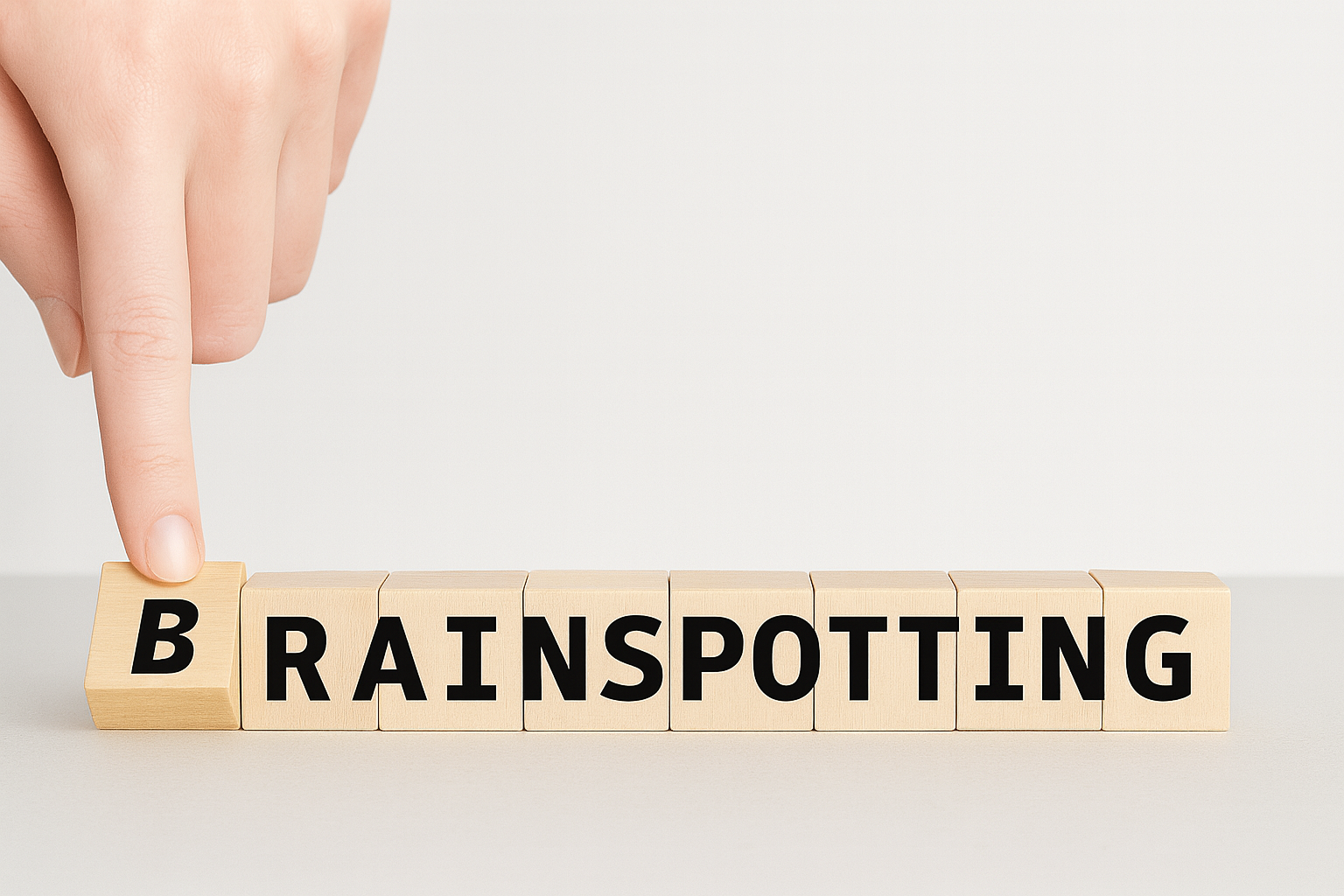
What is Brainspotting
Brainspotting is a modern, neurobiologically informed therapeutic approach — developed in 2003 by the American psychotherapist Dr. David Grand. While working with traumatized clients, he discovered that certain gaze directions provide direct access to deeply rooted emotional and bodily activations. From this insight arose Brainspotting — a method that uses the interplay of brain, body and emotions to process unresolved experiences and integrate them in a lasting way.
By finding a so-called brainspot — a very specific gaze direction associated with an internal activation — access opens to deeper levels of your emotional experience. In this state, your brain can begin to process what burdens you and restore inner balance.
Brainspotting can be helpful in cases of:
- traumatic experiences and chronic stress
- fears, panic and insecurities
- emotional blockages
- self‑esteem issues
- psychosomatic complaints
- performance pressure, creative blocks and professional challenges
Even if you have the feeling that “something is stuck” or you don’t understand recurring reactions — Brainspotting may be a healing option.
How a Brainspotting session works
I do not regard Brainspotting as a standalone therapy, but as a very effective method that unfolds its full potential when integrated into other therapeutic approaches — for example hypnosis or Havening. In a safe, calm atmosphere I support you to
- find your individual brainspot,
- connect gently with your internal experience,
- consciously perceive emerging feelings, bodily sensations and thoughts,
- and give your nervous system the space it needs for processing.
You remain in control at all times and determine the pace. Through my mindful guidance, a protected space is created in which deep inner processes can unfold.
What is Brainspotting
This therapeutic approach supports the processing of stress, emotional blockages, and distressing memories. By using a specific point of gaze—the so-called brainspot—internal networks are activated, allowing the brain to access its natural processing abilities. Emotions and physical tension can gradually release, supported throughout by steady therapeutic presence.
How does this method work
Experiences stored in an unhelpful way can lodge in the nervous system and appear as thoughts, emotions, or physical sensations. Focusing on a precise visual point (brainspot) stimulates the brain’s internal processing mechanisms. This can reduce inner tension and help memories reorganize. The intensity and pace of the process vary individually.
How many sessions are needed before Brainspotting begins
Before starting the focused work, we assess how well you can currently stabilize yourself. You will learn self-regulation techniques – often supported by hypnosis or Havening. Once a sufficient level of stability is present, the therapeutic work with Brainspotting can begin. The duration of this preparatory phase differs from person to person.
How will I feel during a session
Many people experience a mix of inner calm, emotional movement, and increased body awareness. Some feel focused, others notice slight tension or waves of emotion. Everything that arises is welcome – your nervous system sets the pace, while therapeutic guidance ensures safety at all times.
How will I feel after a session
People often report relief, more clarity, or pleasant tiredness. Some notice that the process continues internally – through increased calmness, sensitivity, or vivid thoughts. These reactions are normal and usually fade on their own.
How many sessions do I need and how far apart
The number of sessions depends on your personal goals, the depth of the issue, and your individual pace. Some notice change after a few sessions, while others work over a longer period. Sessions typically take place every one to two weeks. What matters most is that the process feels coherent and safe.
Who should NOT be treated with Brainspotting
Individuals who are in an acute crisis or currently require more intensive medical or psychiatric support should receive other forms of help first. When emotional stability is significantly reduced, preparatory support may also be necessary. Whether this approach is appropriate at a given time is always determined individually.
Which people can be treated with Brainspotting
This method is suitable for people who want to process stress, internal blockages, or distressing memories – regardless of whether the experiences are recent or long past. The prerequisite is that you feel sufficiently stable and experience the therapeutic setting as safe.
Difference between Brainspotting and EMDR
Brainspotting uses a fixed point of gaze (brainspot) that activates direct emotional and physical responses. EMDR uses bilateral stimulation – such as eye movements – to support processing. Brainspotting focuses more deeply on individual activation points, whereas EMDR follows structured, repeated processing sequences.
Difference between Brainspotting and Hypnosis
While hypnosis works with an altered state of consciousness, this method keeps you awake and fully present. The focus lies on a visual point (brainspot) and the connection to internal sensations. Both methods support deeper inner processes, but through different pathways.
Difference between Brainspotting and Havening
The visual focus (Brainspot) allows access to deeper emotional and physical activations. Havening, by contrast, uses gentle touch-based techniques that calm the nervous system and create a sense of safety. The two methods differ, yet complement one another exceptionally well.
Can Brainspotting be used without Hypnosis or Havening
Yes, Brainspotting can be applied on its own. In our practice, however, we often combine it with hypnosis or Havening because these methods strengthen each other and often make the process more stable and effective. This helps many clients regulate more easily and move through deeper processes more safely. Brainspotting can still be used independently at any point during therapy.
What should I do in an emotional crisis if the practice is not reachable
If you are in an emotional emergency and the practice is not available, please contact the following services:
Ärztlicher Bereitschaftsdienst – Tel. 116 117
Sozialpsychiatrischer Dienst Düsseldorf – Tel. 0211 - 8995391
LVR-Klinikum Düsseldorf – Tel. 0211 - 922 0
These services can provide professional support in acute crisis situations.